by Jeffrey Bell-Hanson
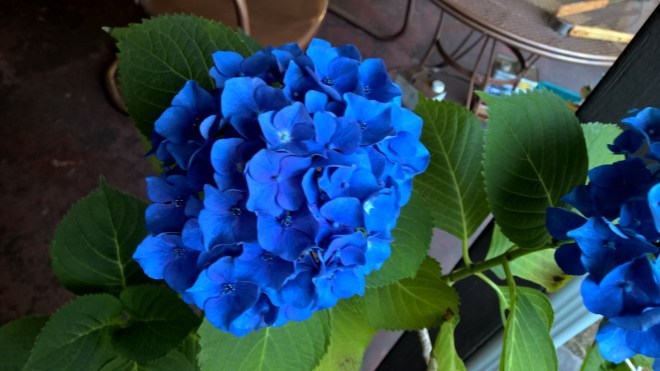
Just outside the house into which we moved three years ago lives a hydrangea, a new experience for me. I’m sure I have seen them, but I had no previous experience with the dynamic character of this plant’s relationship with its environment. A couple of months after our arrival this bush astounded me by producing blooms in the most electric blue I have ever seen in nature.
A few weeks before, my wife had painted an old swing set in the yard (about 20 feet away) with the same color. I wondered if the plant had somehow seen the paint color and decided to try it on. I assumed that wasn’t possible, but it was such a charming notion that I hesitated to search out the real reason for this remarkable coincidence.
The relatively pale lavender color of the blooms the next year finally prompted me to learn a little more about this extraordinary plant and its chameleon-like ability. It seems that the amount of aluminum that the plant’s roots can extract from the soil can, in part, determine the degree to which the blooms may produce the bright blue that I had seen in that first season. Little or no aluminum? Little or no blue. In that case the blooms may appear pink, depending on the character of the plant, or they may just appear pale, as ours had done.
The presence or absence of aluminum is not the whole story. A high pH factor in the soil will inhibit the plant’s ability to absorb the aluminum even if it is present, thus producing duller colors. The genetic profile of the plant is also important. An individual plant has to be inherently capable of producing bright colors at either end of the spectrum in order to display the most brilliant blues or pinks. Some are not.
I am struck by the close parallel between the chromatic behavior of these plants and our own characteristics as human beings. We each live with our own immutable limitations on our capacity for this or that behavior or ability. But the extent to which these genetic factors actually limit us is subject to multiple environmental factors. If we find ourselves in a rich environment, nurtured by the love and care of those around us, we can push the outer limits of, perhaps even transcend those natural boundaries. Yet even those who have the highest capacities can be severely limited if denied those critical resources.
I may never again see a blue as bright as the one that our hydrangea produced during that first season in our new house. Or perhaps it will produce something even more brilliant in a future year. Now that I know how important the resources available to the plant are in allowing it to reach its potential, I am in a position to do something about it. I can give it the best chance possible to dazzle.
Knowing how significant what I do is for this plant, can I do less for the people around me?
 Beating in Air